
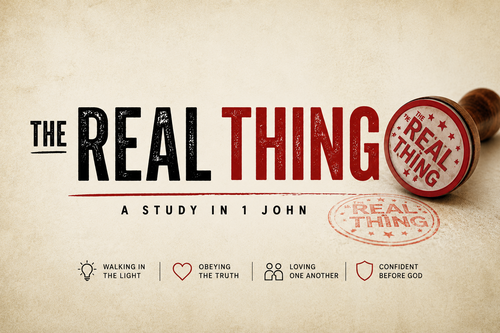
The Four Marks of Genuine Faith: Living Out What We Believe
How can we know if our faith is real? It's a question that has troubled believers throughout the ages. We might attend church regularly, call ourselves Christians, and even know a lot about Jesus. But is there a way to distinguish genuine faith from a counterfeit?
The Apostle John addressed this very question in his first letter to early believers. His goal wasn't to make Christians doubt their salvation, but rather to help them know with certainty that they truly belong to God. Throughout 1 John chapter 2, verses 3-17, we discover four unmistakable marks that reveal the reality of a relationship with Jesus Christ.
First Mark: Genuine Believers Obey Jesus
John begins with a powerful statement: "By this we know that we have come to know Him, if we keep His commandments."
This isn't about knowing facts about Jesus. It's about knowing Jesus personally—a relationship that fundamentally transforms how we live. The word "know" in the original Greek refers to knowledge gained through personal experience and relationship, not merely intellectual understanding.
But we need to be careful here. John isn't teaching that we earn salvation through our works. Scripture is abundantly clear that we are saved by grace through faith alone. Instead, John is teaching that obedience is evidence that salvation has already occurred. Think of it this way: obedience isn't the root of salvation—it's the fruit. Jesus is the root of our salvation, but obedience and good works are the natural fruit that grows from that relationship.
John then issues a sobering warning: "The one who says 'I have come to know Him' and does not keep His commandments is a liar and the truth is not in him."
Notice what John doesn't say. He doesn't condemn those who struggle to obey or those who occasionally fail. The issue isn't whether we stumble—we all do. The issue is whether we can live in continual, willful disobedience while claiming to follow Christ. These two realities cannot coexist. A person may profess faith and even call themselves a Christian, but if there's no desire to obey Christ, no submission to His lordship, and no evidence of His transforming work in their life, then that profession is empty.
Why? Because genuine faith always changes a person. Not perfectly. Not instantly. But genuinely. The moment Christ's Spirit comes to live in us, He immediately begins transforming us into the image of His Son.
Second Mark: Genuine Believers Love God's People
John moves from obedience to another critical test: "The one who says that he is in the light and yet hates his brother or sister is in the darkness until now."
The command to love isn't new. Even in the Old Testament, God's people were called to love Him and love others. When Jesus was asked about the greatest commandment, He pointed back to this ancient truth: love God with all your heart, soul, and mind, and love your neighbor as yourself.
Yet this command is also new because Jesus showed us the full measure of what love really looks like. His love was undeserved. He loved us when we were His enemies, when we were sinners separated from God by our own choices. On the cross, Jesus demonstrated what true love means—laying down His life for those who didn't deserve it.
John doesn't leave love in the realm of theory. He shows us how love becomes visible in a believer's life: "The one who loves his brother and sister remains in the light and there is nothing in him to cause stumbling."
Our relationships reveal the truth of our profession. Do we genuinely love God's people? Not just tolerate them or put up with them, but truly love them? Do we love those who are different from us? Those who get on our nerves? Those who seem needy or draining?
Love is one of the clearest marks that God's grace is at work in our lives. It's evidence that we truly belong to Jesus.
John warns that hatred doesn't simply damage relationships—it darkens the soul. When bitterness, resentment, and hostility characterize our hearts toward others, something is deeply wrong with our profession of faith.
Third Mark: Genuine Believers Remember Who They Are
Before warning believers about loving the world, John pauses to remind them who they are in Christ. This is crucial because identity fuels obedience. Throughout Scripture, identity comes before instruction.
John reminds believers of three foundational truths:
Your sins are forgiven. Not might be forgiven or will be forgiven someday—they have been forgiven. It's a settled reality accomplished through Christ's finished work on the cross. We don't obey to earn God's acceptance. We obey because we've already been accepted in Christ.
You know the Father. Christianity isn't merely knowing facts about God; it's knowing Him personally. Through Jesus Christ, we've been brought into relationship with the Heavenly Father. We're no longer strangers or enemies—we're His children.
You have overcome the evil one. Believers aren't fighting for victory; they're fighting from victory. The outcome has already been decided. Jesus has conquered sin, death, and Satan. Even though spiritual warfare continues, we live in confidence that the victory is already ours through Christ.
Fourth Mark: Genuine Believers Reject the World's Values
John issues a clear warning: "Do not love the world nor the things in the world. If anyone loves the world, the love of the Father is not in him."
The "world" here doesn't refer to people or the planet itself—God loves people. Rather, it refers to the world's system, the way of thinking, living, and valuing things that operates at war with God.
John identifies three ways the world seeks to capture our hearts:
The lust of the flesh—sinful desires seeking satisfaction apart from God's will. The world says, "Do what feels good; follow your desires; live for yourself."
The lust of the eyes—the temptation to want what we see, the constant craving for more possessions, success, and status.
The pride of life—finding significance in what we have or accomplish rather than in who we are in Christ.
None of these values come from the Father. They belong to the world. And the world promises satisfaction but never delivers lasting fulfillment.
John ends with a shift in perspective: "The world is passing away and also its lust, but the one who does the will of God continues to live forever."
Everything the world offers has an expiration date. Money fades. Possessions fade. Success, popularity, achievements—all will one day disappear. But those who invest in doing God's will invest in what lasts eternally.
It's the difference between building sandcastles and building in a kingdom that can never be shaken.
Living Out Genuine Faith
These four marks aren't meant to make us doubt our salvation but to strengthen our assurance. Genuine believers obey Jesus—not perfectly, but increasingly. They love God's people—not just with words, but with sincere care. They remember who they are—already accepted in Christ. And they reject the world's values—because Jesus offers something infinitely greater.
The life of Christ becomes visible in the life of the believer. We obey what He says. We love what He loves. We remember who we are. And we live for what lasts.
Where does your life stand today? Are these marks evident in your journey with Christ?
The Apostle John addressed this very question in his first letter to early believers. His goal wasn't to make Christians doubt their salvation, but rather to help them know with certainty that they truly belong to God. Throughout 1 John chapter 2, verses 3-17, we discover four unmistakable marks that reveal the reality of a relationship with Jesus Christ.
First Mark: Genuine Believers Obey Jesus
John begins with a powerful statement: "By this we know that we have come to know Him, if we keep His commandments."
This isn't about knowing facts about Jesus. It's about knowing Jesus personally—a relationship that fundamentally transforms how we live. The word "know" in the original Greek refers to knowledge gained through personal experience and relationship, not merely intellectual understanding.
But we need to be careful here. John isn't teaching that we earn salvation through our works. Scripture is abundantly clear that we are saved by grace through faith alone. Instead, John is teaching that obedience is evidence that salvation has already occurred. Think of it this way: obedience isn't the root of salvation—it's the fruit. Jesus is the root of our salvation, but obedience and good works are the natural fruit that grows from that relationship.
John then issues a sobering warning: "The one who says 'I have come to know Him' and does not keep His commandments is a liar and the truth is not in him."
Notice what John doesn't say. He doesn't condemn those who struggle to obey or those who occasionally fail. The issue isn't whether we stumble—we all do. The issue is whether we can live in continual, willful disobedience while claiming to follow Christ. These two realities cannot coexist. A person may profess faith and even call themselves a Christian, but if there's no desire to obey Christ, no submission to His lordship, and no evidence of His transforming work in their life, then that profession is empty.
Why? Because genuine faith always changes a person. Not perfectly. Not instantly. But genuinely. The moment Christ's Spirit comes to live in us, He immediately begins transforming us into the image of His Son.
Second Mark: Genuine Believers Love God's People
John moves from obedience to another critical test: "The one who says that he is in the light and yet hates his brother or sister is in the darkness until now."
The command to love isn't new. Even in the Old Testament, God's people were called to love Him and love others. When Jesus was asked about the greatest commandment, He pointed back to this ancient truth: love God with all your heart, soul, and mind, and love your neighbor as yourself.
Yet this command is also new because Jesus showed us the full measure of what love really looks like. His love was undeserved. He loved us when we were His enemies, when we were sinners separated from God by our own choices. On the cross, Jesus demonstrated what true love means—laying down His life for those who didn't deserve it.
John doesn't leave love in the realm of theory. He shows us how love becomes visible in a believer's life: "The one who loves his brother and sister remains in the light and there is nothing in him to cause stumbling."
Our relationships reveal the truth of our profession. Do we genuinely love God's people? Not just tolerate them or put up with them, but truly love them? Do we love those who are different from us? Those who get on our nerves? Those who seem needy or draining?
Love is one of the clearest marks that God's grace is at work in our lives. It's evidence that we truly belong to Jesus.
John warns that hatred doesn't simply damage relationships—it darkens the soul. When bitterness, resentment, and hostility characterize our hearts toward others, something is deeply wrong with our profession of faith.
Third Mark: Genuine Believers Remember Who They Are
Before warning believers about loving the world, John pauses to remind them who they are in Christ. This is crucial because identity fuels obedience. Throughout Scripture, identity comes before instruction.
John reminds believers of three foundational truths:
Your sins are forgiven. Not might be forgiven or will be forgiven someday—they have been forgiven. It's a settled reality accomplished through Christ's finished work on the cross. We don't obey to earn God's acceptance. We obey because we've already been accepted in Christ.
You know the Father. Christianity isn't merely knowing facts about God; it's knowing Him personally. Through Jesus Christ, we've been brought into relationship with the Heavenly Father. We're no longer strangers or enemies—we're His children.
You have overcome the evil one. Believers aren't fighting for victory; they're fighting from victory. The outcome has already been decided. Jesus has conquered sin, death, and Satan. Even though spiritual warfare continues, we live in confidence that the victory is already ours through Christ.
Fourth Mark: Genuine Believers Reject the World's Values
John issues a clear warning: "Do not love the world nor the things in the world. If anyone loves the world, the love of the Father is not in him."
The "world" here doesn't refer to people or the planet itself—God loves people. Rather, it refers to the world's system, the way of thinking, living, and valuing things that operates at war with God.
John identifies three ways the world seeks to capture our hearts:
The lust of the flesh—sinful desires seeking satisfaction apart from God's will. The world says, "Do what feels good; follow your desires; live for yourself."
The lust of the eyes—the temptation to want what we see, the constant craving for more possessions, success, and status.
The pride of life—finding significance in what we have or accomplish rather than in who we are in Christ.
None of these values come from the Father. They belong to the world. And the world promises satisfaction but never delivers lasting fulfillment.
John ends with a shift in perspective: "The world is passing away and also its lust, but the one who does the will of God continues to live forever."
Everything the world offers has an expiration date. Money fades. Possessions fade. Success, popularity, achievements—all will one day disappear. But those who invest in doing God's will invest in what lasts eternally.
It's the difference between building sandcastles and building in a kingdom that can never be shaken.
Living Out Genuine Faith
These four marks aren't meant to make us doubt our salvation but to strengthen our assurance. Genuine believers obey Jesus—not perfectly, but increasingly. They love God's people—not just with words, but with sincere care. They remember who they are—already accepted in Christ. And they reject the world's values—because Jesus offers something infinitely greater.
The life of Christ becomes visible in the life of the believer. We obey what He says. We love what He loves. We remember who we are. And we live for what lasts.
Where does your life stand today? Are these marks evident in your journey with Christ?
Posted in Sermon Blogs
Recent
Overcomer: How Faith Gives Us Victory Over the World
August 10th, 2026
Perfect Love Drives Out Fear: How God's Love Changes Everything
August 3rd, 2026
How to Tell the Truth From a Lie: A Guide to Spiritual Discernment
July 27th, 2026
Love That Can Be Seen: What Genuine Christian Love Actually Looks Like
July 20th, 2026
Family Resemblance: What Does Your Life Reveal?
July 13th, 2026
Archive
2026
January
February
March
April
May
June
July
No Comments