
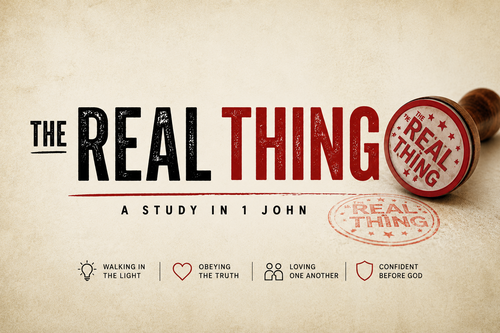
The Real Thing: Discovering Authentic Faith in a World of Counterfeits
We live in a world saturated with imitations. Counterfeit money circulates alongside genuine currency. Knock-off products masquerade as authentic brands. People create false identities online, pretending to be someone they're not. All counterfeits share one thing in common: they appear authentic on the surface but eventually reveal their true nature.
The same principle applies to spiritual matters. Not everyone who claims to know God truly knows Him. Not every message about God actually comes from God. Not every profession of faith is genuine. This sobering reality confronts us with an urgent question: How can we know our faith is the real thing?
The Foundation: Life Revealed
The first letter of John addresses this question head-on, beginning not with rules or regulations but with a person—Jesus Christ. The opening verses take us back to the foundation of Christianity with the testimony of eyewitnesses who heard, saw, and touched the Word of life.
This testimony isn't based on rumors, myths, or human imagination. It's grounded in historical reality. The apostles didn't repeat secondhand stories or pass along spiritual theories. They testified to what they personally experienced during three years of walking with Jesus.
Notice the progression: "What we have heard, what we have seen with our eyes, what we have looked at and touched with our hands." Like a witness taking the stand in court, the evidence piles up. This is eyewitness testimony about the eternal Son of God who stepped into human history and became visible, audible, and tangible.
The Jesus proclaimed in Scripture isn't a legend or a spiritual idea. He is the eternal Word who existed from the beginning, before creation itself. Yet this eternal One became human, taking on flesh and dwelling among us. This miracle—the incarnation—stands at the heart of Christianity.
The Purpose: Fellowship and Joy
But why was this testimony proclaimed? Two powerful reasons emerge.
First, so that others might experience fellowship with God. This fellowship isn't merely friendship with other believers, though that's included. It's intimate relationship with the Father and His Son, Jesus Christ. Christianity offers more than information about God; it provides transformation through knowing God personally.
Second, so that joy may be complete. The flow moves from experience to proclamation, from proclamation to fellowship, and from fellowship to fullness of joy. Those who receive Jesus enter into relationship with God and discover the abundant life He promised—not just in eternity, but starting now.
The question isn't whether we know facts about Jesus. The question is: Do we know Him? Have we entered into fellowship with God through His Son? Are we experiencing the joy that comes from walking in relationship with Him?
The Evidence: Walking in Light
Having established who Jesus is, the text shifts to what genuine fellowship with God looks like. The foundation is clear: "God is light, and in Him there is no darkness at all." Everything flows from this truth about God's character—His perfect holiness, righteousness, and purity.
Three false claims get exposed in this passage.
False Claim #1: "I can know God and still walk in darkness."
Walking refers to a pattern of life, a direction, a lifestyle. The issue isn't an occasional stumble into sin but a life characterized by pursuing things that oppose God's character. Someone cannot consistently walk in darkness while claiming fellowship with a God who is light.
The truth? "If we walk in the light as He Himself is in the light, we have fellowship with one another, and the blood of Jesus His Son cleanses us from all sin." Walking in the light means living honestly before God, responding to His truth, and aligning our lives with His will.
This isn't a picture of sinless living but of believers pursuing holiness. As we walk in the light, two results follow: strengthened relationships with other believers and continual cleansing through Jesus' blood.
False Claim #2: "I have no sin nature."
Even as believers, we still battle our flesh. We've been redeemed but not yet perfected. When we convince ourselves we've escaped the presence of sin, we deceive ourselves. Self-deception blinds us to our true condition and leads us to trust in our own spiritual maturity rather than God's grace.
The biblical response? "If we confess our sins, He is faithful and righteous so that He will forgive us our sins and cleanse us from all unrighteousness." The difference between counterfeit spirituality and genuine Christianity isn't the absence of sin—it's the response to sin. Genuine believers don't deny their sinfulness; they acknowledge it, agree with God about it, and bring it into the light.
False Claim #3: "I have never sinned."
This most serious claim doesn't just deceive us—it calls God a liar. Why? Because God has clearly declared through His Word that all people are sinners. "All have sinned and fall short of the glory of God." "There is none righteous, no, not one."
Genuine believers don't spend their lives defending themselves. They spend their lives depending on Jesus. The mark of a mature Christian isn't sinlessness but humility.
The Hope: Grace That Must Be Trusted
What happens when we fail? What hope exists for believers who sin?
The answer comes with tender affection: "My little children, I am writing these things to you so that you may not sin. And if anyone sins, we have an advocate with the Father, Jesus Christ the righteous."
Notice the balance. The standard doesn't get lowered—believers should pursue holiness and resist sin. But there's also realism about the Christian life. We're no longer slaves to sin, but we're not yet free from its presence.
When we fail, grace must be trusted. And grace is grounded in a person.
Jesus serves as our advocate—our defense attorney who speaks on our behalf before the Father. While Satan accuses, Jesus represents us. Our standing before God rests not on our performance but on Jesus' perfect righteousness.
More than that, Jesus is our propitiation—our atoning sacrifice. The cross satisfied God's righteous wrath against sin. Jesus paid the penalty our sins deserved. He Himself is the sacrifice—no substitute, no addition needed. Not Jesus plus anything. Jesus alone.
This sacrifice is sufficient for all who trust in Him. Christ isn't merely the Savior of a spiritual elite. He's the only Savior the world will ever need. No one is beyond the reach of God's grace. No sin is beyond the power of Jesus' sacrifice.
Living the Real Thing
So how do we respond?
Believe in the Christ who was revealed. Eternal life is found in Jesus alone. If you've never trusted Him, today is the day.
Walk in the light. Stop hiding, excusing, and minimizing sin. Bring it into the light of God's truth and receive His forgiveness.
Confess sin quickly. When the Holy Spirit convicts, agree with God and confess what He reveals.
Trust Christ's grace completely. Our hope isn't found in our performance but in our advocate. When we fail, run to Him, not away from Him.
When eternal life has been revealed, when light is being walked, and when grace is being trusted, the result is faith that is genuine, fellowship that is real, and joy that is complete. This is the real thing—authentic Christianity that transforms lives and reflects Christ's light to a world desperately searching for truth.
The same principle applies to spiritual matters. Not everyone who claims to know God truly knows Him. Not every message about God actually comes from God. Not every profession of faith is genuine. This sobering reality confronts us with an urgent question: How can we know our faith is the real thing?
The Foundation: Life Revealed
The first letter of John addresses this question head-on, beginning not with rules or regulations but with a person—Jesus Christ. The opening verses take us back to the foundation of Christianity with the testimony of eyewitnesses who heard, saw, and touched the Word of life.
This testimony isn't based on rumors, myths, or human imagination. It's grounded in historical reality. The apostles didn't repeat secondhand stories or pass along spiritual theories. They testified to what they personally experienced during three years of walking with Jesus.
Notice the progression: "What we have heard, what we have seen with our eyes, what we have looked at and touched with our hands." Like a witness taking the stand in court, the evidence piles up. This is eyewitness testimony about the eternal Son of God who stepped into human history and became visible, audible, and tangible.
The Jesus proclaimed in Scripture isn't a legend or a spiritual idea. He is the eternal Word who existed from the beginning, before creation itself. Yet this eternal One became human, taking on flesh and dwelling among us. This miracle—the incarnation—stands at the heart of Christianity.
The Purpose: Fellowship and Joy
But why was this testimony proclaimed? Two powerful reasons emerge.
First, so that others might experience fellowship with God. This fellowship isn't merely friendship with other believers, though that's included. It's intimate relationship with the Father and His Son, Jesus Christ. Christianity offers more than information about God; it provides transformation through knowing God personally.
Second, so that joy may be complete. The flow moves from experience to proclamation, from proclamation to fellowship, and from fellowship to fullness of joy. Those who receive Jesus enter into relationship with God and discover the abundant life He promised—not just in eternity, but starting now.
The question isn't whether we know facts about Jesus. The question is: Do we know Him? Have we entered into fellowship with God through His Son? Are we experiencing the joy that comes from walking in relationship with Him?
The Evidence: Walking in Light
Having established who Jesus is, the text shifts to what genuine fellowship with God looks like. The foundation is clear: "God is light, and in Him there is no darkness at all." Everything flows from this truth about God's character—His perfect holiness, righteousness, and purity.
Three false claims get exposed in this passage.
False Claim #1: "I can know God and still walk in darkness."
Walking refers to a pattern of life, a direction, a lifestyle. The issue isn't an occasional stumble into sin but a life characterized by pursuing things that oppose God's character. Someone cannot consistently walk in darkness while claiming fellowship with a God who is light.
The truth? "If we walk in the light as He Himself is in the light, we have fellowship with one another, and the blood of Jesus His Son cleanses us from all sin." Walking in the light means living honestly before God, responding to His truth, and aligning our lives with His will.
This isn't a picture of sinless living but of believers pursuing holiness. As we walk in the light, two results follow: strengthened relationships with other believers and continual cleansing through Jesus' blood.
False Claim #2: "I have no sin nature."
Even as believers, we still battle our flesh. We've been redeemed but not yet perfected. When we convince ourselves we've escaped the presence of sin, we deceive ourselves. Self-deception blinds us to our true condition and leads us to trust in our own spiritual maturity rather than God's grace.
The biblical response? "If we confess our sins, He is faithful and righteous so that He will forgive us our sins and cleanse us from all unrighteousness." The difference between counterfeit spirituality and genuine Christianity isn't the absence of sin—it's the response to sin. Genuine believers don't deny their sinfulness; they acknowledge it, agree with God about it, and bring it into the light.
False Claim #3: "I have never sinned."
This most serious claim doesn't just deceive us—it calls God a liar. Why? Because God has clearly declared through His Word that all people are sinners. "All have sinned and fall short of the glory of God." "There is none righteous, no, not one."
Genuine believers don't spend their lives defending themselves. They spend their lives depending on Jesus. The mark of a mature Christian isn't sinlessness but humility.
The Hope: Grace That Must Be Trusted
What happens when we fail? What hope exists for believers who sin?
The answer comes with tender affection: "My little children, I am writing these things to you so that you may not sin. And if anyone sins, we have an advocate with the Father, Jesus Christ the righteous."
Notice the balance. The standard doesn't get lowered—believers should pursue holiness and resist sin. But there's also realism about the Christian life. We're no longer slaves to sin, but we're not yet free from its presence.
When we fail, grace must be trusted. And grace is grounded in a person.
Jesus serves as our advocate—our defense attorney who speaks on our behalf before the Father. While Satan accuses, Jesus represents us. Our standing before God rests not on our performance but on Jesus' perfect righteousness.
More than that, Jesus is our propitiation—our atoning sacrifice. The cross satisfied God's righteous wrath against sin. Jesus paid the penalty our sins deserved. He Himself is the sacrifice—no substitute, no addition needed. Not Jesus plus anything. Jesus alone.
This sacrifice is sufficient for all who trust in Him. Christ isn't merely the Savior of a spiritual elite. He's the only Savior the world will ever need. No one is beyond the reach of God's grace. No sin is beyond the power of Jesus' sacrifice.
Living the Real Thing
So how do we respond?
Believe in the Christ who was revealed. Eternal life is found in Jesus alone. If you've never trusted Him, today is the day.
Walk in the light. Stop hiding, excusing, and minimizing sin. Bring it into the light of God's truth and receive His forgiveness.
Confess sin quickly. When the Holy Spirit convicts, agree with God and confess what He reveals.
Trust Christ's grace completely. Our hope isn't found in our performance but in our advocate. When we fail, run to Him, not away from Him.
When eternal life has been revealed, when light is being walked, and when grace is being trusted, the result is faith that is genuine, fellowship that is real, and joy that is complete. This is the real thing—authentic Christianity that transforms lives and reflects Christ's light to a world desperately searching for truth.
Posted in Sermon Blogs
Recent
Overcomer: How Faith Gives Us Victory Over the World
August 10th, 2026
Perfect Love Drives Out Fear: How God's Love Changes Everything
August 3rd, 2026
How to Tell the Truth From a Lie: A Guide to Spiritual Discernment
July 27th, 2026
Love That Can Be Seen: What Genuine Christian Love Actually Looks Like
July 20th, 2026
Family Resemblance: What Does Your Life Reveal?
July 13th, 2026
Archive
2026
January
February
March
April
May
June
July
No Comments