
The Great Exchange: Understanding Reconciliation Through the Cross
In a world fractured by division, conflict, and brokenness, the concept of reconciliation carries profound weight. Yet nowhere is reconciliation more powerfully demonstrated than in the message of the cross—a message that doesn't just offer hope for eternity but transforms our very identity today.
A New Creation
The Apostle Paul's words in 2 Corinthians 5:17 cut through religious complexity with stunning clarity: "If anyone is in Christ, the new creation has come." This isn't about becoming a slightly improved version of yourself. It's not about sanding down your rough edges or cleaning up your act. Paul uses the language of creation itself—the same creative power that spoke the universe into existence—to describe what happens when we come to Christ.
Being "in Christ" means something far more profound than intellectual agreement with religious ideas. It describes a spiritual reality where our lives become joined to His life, much like a branch connected to a tree. When that connection exists, the tree's life flows into the branch, providing strength, nourishment, and the ability to bear fruit. Disconnect the branch, and it withers and dies. But connected to Christ, His grace strengthens us, His Spirit gives us life, and we grow and flourish.
This new creation means the old has gone. Our old identity—defined by sin and rebellion—no longer determines who we are. Our old standing—condemned and separated from God—has been replaced. Our old master—the power and control of sin—has been overthrown. We now live under new management, with a new identity defined not by our failures but by Jesus Himself.
The Gap That Sin Created
The prophet Isaiah captured humanity's fundamental problem with stark honesty: "Your iniquities have separated you from your God." Sin created a chasm between fallen humanity and a holy Creator—a gap we could never bridge on our own. Every attempt to reach God through our own efforts, our own goodness, our own religious activities only demonstrates the impossibility of the task.
This is where the cross enters the story with breathtaking power. What we call reconciliation is God's answer to the gap that sin created. And here's the crucial truth: reconciliation didn't begin with us. It began with God.
God's Initiative
Paul makes this abundantly clear in 2 Corinthians 5:18-19: "All this is from God, who reconciled us to himself through Christ." Not some of it. Not part of it. All of it is from God. This shatters every version of Christianity that treats salvation as a cooperative effort, as if God does His part and we must do ours.
The truth is more humbling and more glorious: we bring nothing to the table except the sin that made reconciliation necessary in the first place. Reconciliation isn't a meeting in the middle. It's not God waiting for us to clean ourselves up. It's God, in His sovereign grace, doing everything necessary to close the gap we created.
Consider this: while we were still sinners, Christ died for us. When Adam sinned, he hid from God—but God sought him in the garden. Throughout Israel's history of repeated rebellion and idolatry, God continued pursuing His people. In Christ, God came to rescue sinners, taking the initiative from start to finish.
The Great Exchange
But how can a holy God make sinners new? How can people once separated from Him suddenly become new creations? The answer lies in what theologians call "the great exchange," revealed in one of Scripture's most powerful verses: "God made him who had no sin to be sin for us, so that in him we might become the righteousness of God" (2 Corinthians 5:21).
This single verse contains the heart of the gospel. Jesus, the perfect Son of God who lived in complete obedience to the Father, took upon Himself the guilt and judgment of our sin. He didn't become sinful, but at the cross, our sin was credited to His account. The judgment we deserved fell upon Him. He stood in our place.
And in exchange, His righteousness was credited to our account. When God looks upon those who have put their faith in Christ, He doesn't see their sin—He sees the righteousness of Jesus. This is why believers can stand before God with confidence, not because we are righteous on our own, but because Jesus is righteous for us.
The cross reveals two profound truths simultaneously: the seriousness of sin and the depth of God's love. Our sin was so serious that Jesus had to bear its penalty. But His love was so great that He was willing to do so.
Ambassadors of Reconciliation
Yet God didn't reconcile us only to restore our relationship with Him. He reconciled us so we might carry His message to others. Paul writes: "We are therefore Christ's ambassadors, as though God were making his appeal through us. We implore you on Christ's behalf: Be reconciled to God" (2 Corinthians 5:20).
An ambassador represents a king in foreign territory. They don't speak for themselves but on behalf of the one who sent them. Every follower of Christ—not just pastors, missionaries, or church leaders, but every believer—has been sent into the world as a representative of Jesus. We live in this world, but we belong to another kingdom.
When we share the message of the gospel, God Himself appeals to people through us. We're not delivering our own message but God's message of reconciliation. This should fill us with both humility and confidence—humility because it's not about our eloquence or skill, and confidence because God works through the message of the gospel, and His word will not return void.
The Invitation Still Stands
The message of reconciliation is urgent. Paul uses strong language—he implores, he pleads, he begs people not to turn their back on God. The door of reconciliation has been opened through the cross, but people must respond in faith to the work Jesus has done.
The gospel isn't about self-improvement, becoming better people, or committing to religious activities. The call is simple but profound: Be reconciled to God through Jesus Christ. We don't need to be better; we need to be new. And that only happens through faith in Jesus.
Perhaps you're reading this and realize you've been trying to bridge the gap yourself—through good works, religious observance, or moral effort. The liberating truth is that God has already done the work. He took the initiative. He provided the way. He made the exchange. All that remains is to turn from our own way and trust in Christ alone.
For those already reconciled to God, the question becomes: Who in your life might God be inviting you to love, pray for, or speak to about this hope? Your family members, friends, coworkers, neighbors—God has placed you in your unique sphere of influence for this very purpose.
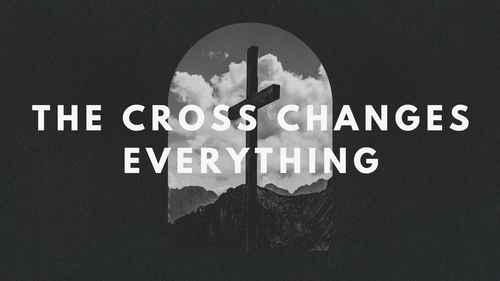
The cross changes everything. It makes us new. It reconciles us to God. And it sends us out with the greatest message the world has ever heard: Be reconciled to God.
A New Creation
The Apostle Paul's words in 2 Corinthians 5:17 cut through religious complexity with stunning clarity: "If anyone is in Christ, the new creation has come." This isn't about becoming a slightly improved version of yourself. It's not about sanding down your rough edges or cleaning up your act. Paul uses the language of creation itself—the same creative power that spoke the universe into existence—to describe what happens when we come to Christ.
Being "in Christ" means something far more profound than intellectual agreement with religious ideas. It describes a spiritual reality where our lives become joined to His life, much like a branch connected to a tree. When that connection exists, the tree's life flows into the branch, providing strength, nourishment, and the ability to bear fruit. Disconnect the branch, and it withers and dies. But connected to Christ, His grace strengthens us, His Spirit gives us life, and we grow and flourish.
This new creation means the old has gone. Our old identity—defined by sin and rebellion—no longer determines who we are. Our old standing—condemned and separated from God—has been replaced. Our old master—the power and control of sin—has been overthrown. We now live under new management, with a new identity defined not by our failures but by Jesus Himself.
The Gap That Sin Created
The prophet Isaiah captured humanity's fundamental problem with stark honesty: "Your iniquities have separated you from your God." Sin created a chasm between fallen humanity and a holy Creator—a gap we could never bridge on our own. Every attempt to reach God through our own efforts, our own goodness, our own religious activities only demonstrates the impossibility of the task.
This is where the cross enters the story with breathtaking power. What we call reconciliation is God's answer to the gap that sin created. And here's the crucial truth: reconciliation didn't begin with us. It began with God.
God's Initiative
Paul makes this abundantly clear in 2 Corinthians 5:18-19: "All this is from God, who reconciled us to himself through Christ." Not some of it. Not part of it. All of it is from God. This shatters every version of Christianity that treats salvation as a cooperative effort, as if God does His part and we must do ours.
The truth is more humbling and more glorious: we bring nothing to the table except the sin that made reconciliation necessary in the first place. Reconciliation isn't a meeting in the middle. It's not God waiting for us to clean ourselves up. It's God, in His sovereign grace, doing everything necessary to close the gap we created.
Consider this: while we were still sinners, Christ died for us. When Adam sinned, he hid from God—but God sought him in the garden. Throughout Israel's history of repeated rebellion and idolatry, God continued pursuing His people. In Christ, God came to rescue sinners, taking the initiative from start to finish.
The Great Exchange
But how can a holy God make sinners new? How can people once separated from Him suddenly become new creations? The answer lies in what theologians call "the great exchange," revealed in one of Scripture's most powerful verses: "God made him who had no sin to be sin for us, so that in him we might become the righteousness of God" (2 Corinthians 5:21).
This single verse contains the heart of the gospel. Jesus, the perfect Son of God who lived in complete obedience to the Father, took upon Himself the guilt and judgment of our sin. He didn't become sinful, but at the cross, our sin was credited to His account. The judgment we deserved fell upon Him. He stood in our place.
And in exchange, His righteousness was credited to our account. When God looks upon those who have put their faith in Christ, He doesn't see their sin—He sees the righteousness of Jesus. This is why believers can stand before God with confidence, not because we are righteous on our own, but because Jesus is righteous for us.
The cross reveals two profound truths simultaneously: the seriousness of sin and the depth of God's love. Our sin was so serious that Jesus had to bear its penalty. But His love was so great that He was willing to do so.
Ambassadors of Reconciliation
Yet God didn't reconcile us only to restore our relationship with Him. He reconciled us so we might carry His message to others. Paul writes: "We are therefore Christ's ambassadors, as though God were making his appeal through us. We implore you on Christ's behalf: Be reconciled to God" (2 Corinthians 5:20).
An ambassador represents a king in foreign territory. They don't speak for themselves but on behalf of the one who sent them. Every follower of Christ—not just pastors, missionaries, or church leaders, but every believer—has been sent into the world as a representative of Jesus. We live in this world, but we belong to another kingdom.
When we share the message of the gospel, God Himself appeals to people through us. We're not delivering our own message but God's message of reconciliation. This should fill us with both humility and confidence—humility because it's not about our eloquence or skill, and confidence because God works through the message of the gospel, and His word will not return void.
The Invitation Still Stands
The message of reconciliation is urgent. Paul uses strong language—he implores, he pleads, he begs people not to turn their back on God. The door of reconciliation has been opened through the cross, but people must respond in faith to the work Jesus has done.
The gospel isn't about self-improvement, becoming better people, or committing to religious activities. The call is simple but profound: Be reconciled to God through Jesus Christ. We don't need to be better; we need to be new. And that only happens through faith in Jesus.
Perhaps you're reading this and realize you've been trying to bridge the gap yourself—through good works, religious observance, or moral effort. The liberating truth is that God has already done the work. He took the initiative. He provided the way. He made the exchange. All that remains is to turn from our own way and trust in Christ alone.
For those already reconciled to God, the question becomes: Who in your life might God be inviting you to love, pray for, or speak to about this hope? Your family members, friends, coworkers, neighbors—God has placed you in your unique sphere of influence for this very purpose.
The cross changes everything. It makes us new. It reconciles us to God. And it sends us out with the greatest message the world has ever heard: Be reconciled to God.
Posted in Sermon Blogs
Recent
Overcomer: How Faith Gives Us Victory Over the World
August 10th, 2026
Perfect Love Drives Out Fear: How God's Love Changes Everything
August 3rd, 2026
How to Tell the Truth From a Lie: A Guide to Spiritual Discernment
July 27th, 2026
Love That Can Be Seen: What Genuine Christian Love Actually Looks Like
July 20th, 2026
Family Resemblance: What Does Your Life Reveal?
July 13th, 2026
Archive
2026
January
February
March
April
May
June
July
No Comments